



Beginning on October 1st 2026, UnitedHealthcare will drop prior authorization for approximately 1700 CPT Codes (approximately 30% of their overall prior authorization) as part of their ongoing efforts to reduce administrative burden. The UnitedHealthcare Prior Authorization Changes are expected to affect all commercial, Medicare Advantage, Community, Individual Exchange and Oxford Plans. They include Cardiology, Oncology, Orthopedics, Imaging, Genetic Testing/Lab Testing, Chiropractic Care and Physical/Occupational Therapy.
The important thing that Billing Teams need to be aware of first and foremost is that less authorization does not mean they do not have to verify it. There could be a code in which there was no authorization required this month because of UnitedHealthcare but still may require an authorization through another plan variation or a state specific regulation. If you miss the distinction between the two then what would otherwise be a "clean" claim becomes denied quickly.
Quick Answer
- About 1,700 CPT codes will no longer require prior authorization by UnitedHealthcare as of October 1, 2026; this reduction is expected to reduce the company’s authorization requirements by approximately thirty percent.
- Covered under the new policy are Commercial, Medicare Advantage, Community, Individual Exchange, and Oxford plan members. Cardiology, Imaging, Orthopedic, Gastrointestinal (GI), Physical Therapy (PT), and Surgical Specialty groups are among those impacted most heavily.
- A removal of one specific authorization does not mean that all checks have gone away. The “Plan Variants”, “D-SNPs” and State Exceptions continue to apply for many cases.
- Practitioners need to obtain an updated CPT list from UHC, update their Payer Matrixes, train their Front Desk Staff, and monitor Denial Activity closely after October 1.
What's Behind the September Announcement
In early Spring of 2026, UnitedHealthcare initially stated that it will be eliminating prior authorization for approximately 30% of its existing prior authorization processes as of the close of business on or before December 31st 2026. The elimination is to occur as part of an overall evaluation of all prior authorization activities at UnitedHealthcare, which comes in response to an increasing number of complaints from health care providers regarding delays in processing claims due to denial.
On September 1 and September 2, 2026, UnitedHealthcare provided a memo to its provider network listing the specific CPT Codes that will no longer require prior authorization for services provided on or after October 1, 2026. The codes listed range across oncology, cardiology, orthopedics/musculoskeletal treatments, genetics/lab testing, chiropractic services and physical/occupational therapy.
| Plan Category | Effective Date |
|---|---|
| Commercial plans | Oct. 1, 2026 |
| Medicare Advantage / D-SNP plans | Oct. 1, 2026 |
| Community (Medicaid) plans | Oct. 1, 2026 |
| Individual Exchange plans | Oct. 1, 2026 |
| Oxford plans | Oct. 1, 2026 |
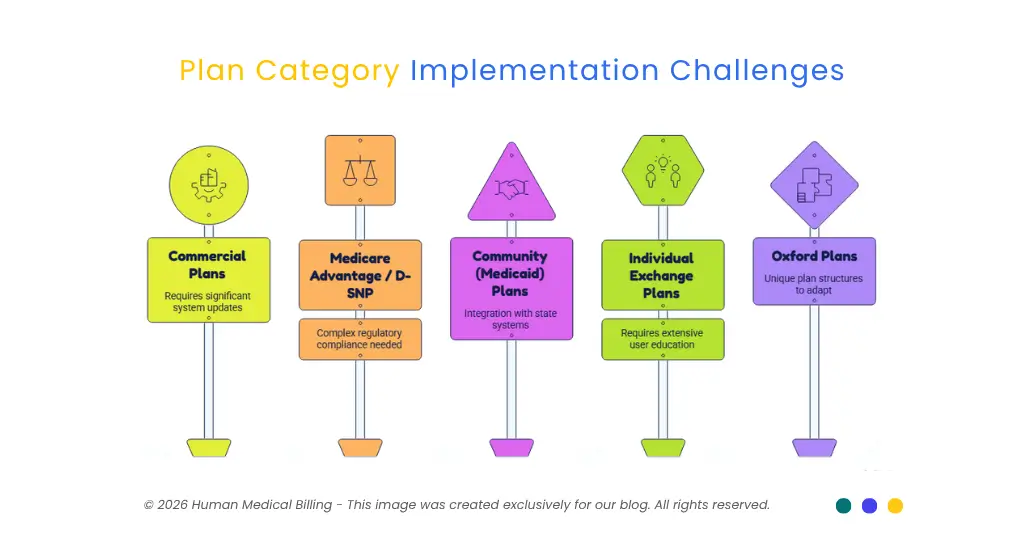
What's Actually Changing on October 1
The following is not an elimination of all prior authorizations for the entire specialty group. The above will be a specific and identified list of CPT Codes, with varying levels based upon plan type. If a CPT Code was eliminated for use as a Commercial member, it could still require prior authorization as a Community plan in a given state, or vice versa. This is something that billing staff are missing due to reading headlines as opposed to viewing the actual CPT lists.
Prior to this October release, UnitedHealthcare has been eliminating some of the prior authorization requirements for Radiology and Cardiology since the beginning of 2026. Therefore, providers should consider this October update to be on top of the other changes that were made to their practices as part of those eliminations. As such, anyone using Medical Coding Services for Cardiology, Imaging or Orthopedic Groups; should view this as a complete rebuild of the Authorization Matrix verses a patch.
Impact on Providers and Billing Teams
High volume specialties will eliminate a lot of actual administrative time. When you have fewer people chasing down fewer approvals there are fewer staff hours spent on the phone at the payers office, fewer patients waiting on a determination prior to an appointment, and therefore less lost in terms of scheduling availability due to a pending authorization.
However, the downside is the risk. The front desk or schedulers may determine a service no longer requires authorization and indeed it does for that particular plan and/or CPT code. In this case, the claim is denied; however, the reason for the denial is clear. This type of denial is likely to be difficult to successfully appeal since the Payers response will simply state: "the requirements were never eliminated for your plan or CPT code."
I recommend that billing departments monitor their organizations' claims over the next 60-90 days. Billing departments should pull their denials related to authorizations (i.e., NCD/ICD) weekly rather than monthly and review the patterns related to those codes that are listed on the October reduction list.
What Should Your Practice Do Now?
1. Pull the updated code list straight from UHC
Do not use secondary summary lists. Use either the United Health Care (UHC) provider portal or the prior authorization/ notification tools to download the exact list of reduced codes for each of the commercial, medicare advantage, community, individual exchange, oxford plans billed by your medical practice. Each will have its own pdf file.
2. Cross-check by plan, not by specialty
Do not automatically assume because a cardiology code was decreased for Commercial insurance, it has been decreased for Medicare Advantage (MA) or community plans. Check each plan type individually.
3. Update the payer authorization matrix
Regardless of whether you use an Excel Spreadsheet, EHR Rule, or Clearing House Edit to identify which codes require Prior Authorization in your Practice, the updated version needs to be made available before October 1. If old rules are still in effect they may continue to generate unnecessary prior authorizations for covered services, while creating holes where new services with no prior authorization will go unflagged.
4. Retrain front-desk and scheduling staff
They're going to be the ones setting appointments for patients and checking their eligibility/benefits. Get this revised list to them in addition to simply sending out an update stating that some CPT codes have been modified.
5. Watch post-October 1 denials closely
Develop a weekly denial review specifically focused on those denial codes related to authorizations at least until the end of the year. The sooner you catch a recurring problem and address it as a workflow issue the less costly it will be. If you don't identify a recurring problem with authorization denials for three months, you'll have an uncollectable amount.
Frequently Asked Questions
The prior authorization reductions will be made to commercial, Medicare Advantage, community, individual exchange, and Oxford plans, however each plan has its own list of codes that can be used for prior authorization. Therefore, removing a code from an authorization for one plan does not automatically eliminate authorization for that service on other plans.
UnitedHealthcare has expressed their intention to continue to reduce the number of prior authorizations they perform through the remainder of 2026. In addition to this general goal, UnitedHealthcare has also committed to decreasing approximately two-thirds of prior authorization required for certain pediatric services. It is possible there could be additional developments related to this issue during the balance of 2025.
There are no negative effects to the claim; however, this will waste staff’s time. There is also another significant risk of not requesting a prior authorization for a service that does require it in order to be covered by the patient’s insurance plan.
You should use the UnitedHealthcare Prior Authorization and Notification tool to receive real-time information about your patient’s plan, so you don’t rely on your memory of the codes that were required at a previous point in time.
Authorization rules are changing quickly; therefore, manually tracking them is an additional liability in itself. The type of gaps Human Medical Billing looks at for all of our clients, including cardiology, orthopedic, imaging, GI, physical therapy (PT), and surgery group practices include the potential for mismatched authorizations to become denied claims. If your billing staff would like to have another review of how the October updates will affect their individual payer mix, our denial management service team will go over your current denial trends and identify the areas of risk from the October update.

Contact Human Medical Billing to schedule a compliance readiness review or learn more about our end-to-end billing and regulatory support services.